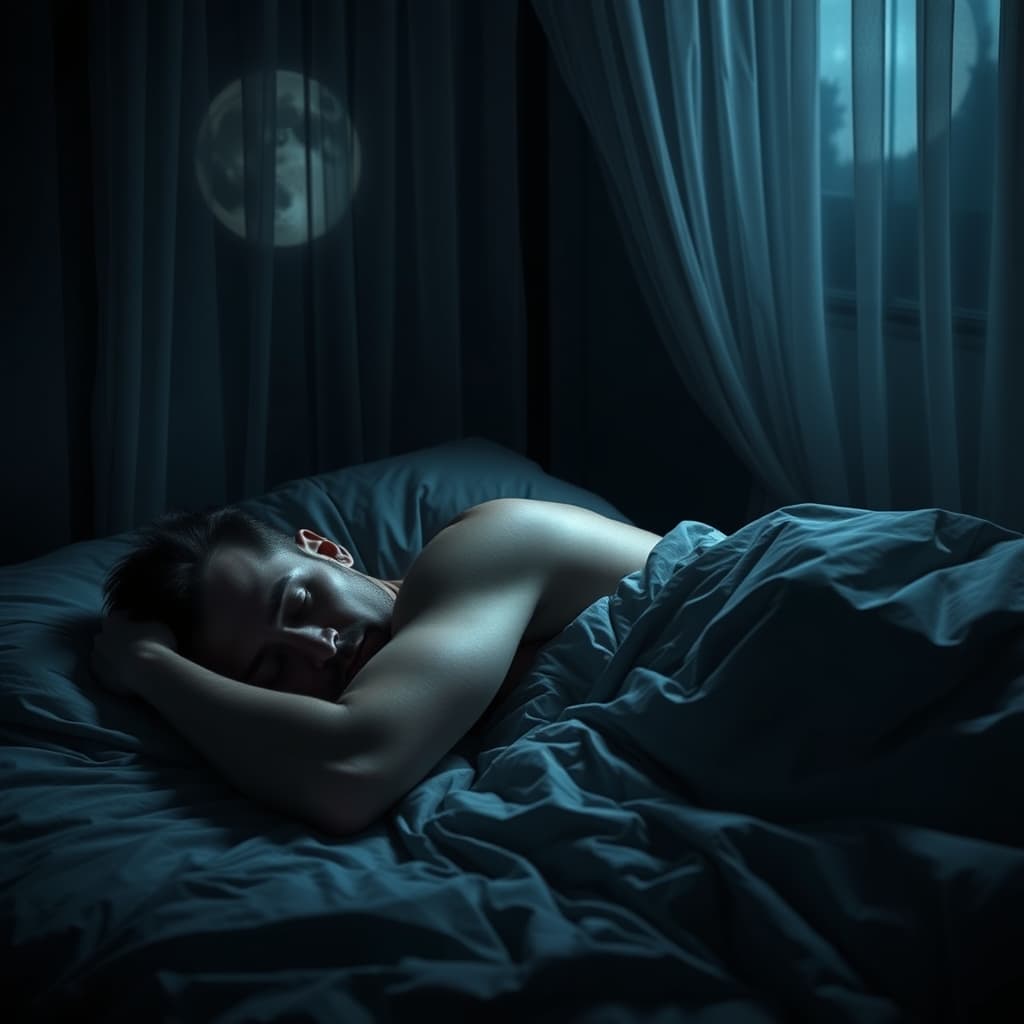
Most men look at their training program when progress stalls. They add sets, switch exercises, buy supplements.
The problem is usually none of those things.
Sleep is where tissue repair happens, where growth hormone is released, and where the nervous system resets. No supplement, ice bath, or protein shake competes with it. Every serious athlete knows rest matters. Most dramatically underestimate how much sleep is doing the actual work.
What Happens During Each Sleep Stage
Human Growth Hormone, the primary driver of tissue repair and muscle protein synthesis, is secreted in pulses during slow-wave sleep. You cannot meaningfully replicate this process while awake, and no supplement replicates it reliably.
| Sleep Stage | Duration per Cycle | What Happens |
|---|---|---|
| N1 / N2 (light) | ~25 min | Temperature drops, heart rate slows, body transitions |
| N3 (deep / slow-wave) | ~20–40 min | Peak HGH release, cellular repair, immune activity |
| REM | ~20–45 min | Motor memory consolidation, nervous system recovery |
You cycle through this roughly every 90 minutes. Missing the early cycles, which are deep-sleep heavy, costs you the most recovery.
The 3 Levers That Actually Move Sleep Quality
1. Consistent Schedule
Your circadian rhythm is a biological clock, not a preference. Sleeping at irregular times disrupts cortisol, melatonin, and growth hormone timing simultaneously, even if total hours are the same.
Fix your wake time first. The sleep time adjusts naturally within 1–2 weeks.
2. Cold, Dark Room
Core body temperature must drop ~1–2°F to initiate sleep. A room above 70°F actively fights this process. Target 65–68°F.
Blackout curtains or a sleep mask eliminate light that suppresses melatonin, even through closed eyelids at low intensities.
3. No Alcohol Near Bedtime
Alcohol sedates but fragments sleep architecture. It suppresses REM and reduces slow-wave sleep, which are exactly the stages that drive recovery. Even one drink 2 hours before bed measurably degrades sleep quality on a polysomnography recording.
Practical Protocol
- Wake at the same time every day (including weekends)
- Get bright light exposure within 30 minutes of waking
- No caffeine after 1pm
- Finish intense training at least 4 hours before bed
- Room temperature 65–68°F
- Last meal 2–3 hours before sleep
- No screens 45–60 minutes before bed, or use blue-light filtering
What This Means for Training
If you are sleeping under 6 hours and wondering why your lifts aren't progressing, your training program is not the problem. Sleep debt accumulates across the week. Four nights of 6-hour sleep creates a deficit equivalent to pulling an all-nighter.
More sleep often does more for strength progress than an extra training session.
Eight hours of optimized sleep beats ten hours of fragmented sleep. Quality first, quantity second.
If late-night compulsive habits are consistently keeping you awake, here's why they're harder to stop than they look.
FAQ
Does sleep affect testosterone?
Yes, significantly. Most testosterone is produced during deep sleep. A single week of sleeping under 5 hours reduces testosterone by up to 15%. Sleep is the single most impactful lifestyle variable for testosterone levels. Here's how to optimize testosterone across all variables.
How much sleep do you need for muscle recovery?
7–9 hours for most people. Below 6 hours, HGH secretion drops, cortisol rises, and muscle protein synthesis is impaired. Athletes in heavy training blocks may need 8–10 hours. More is generally better until you overshoot your natural sleep need, which most men never do.
Why do I wake up tired even after 8 hours?
Usually sleep quality, not quantity. Common causes: alcohol within 3 hours of bed, a room that's too warm, inconsistent sleep timing that disrupts circadian rhythm, or sleep apnea. Fix the room temperature and schedule first. If those don't help, rule out sleep apnea with a doctor.
Does training timing affect sleep quality?
Yes. Intense training raises core body temperature and cortisol for hours afterward. Training within 3–4 hours of bed makes it harder to fall asleep and reduces deep sleep duration. Morning or early afternoon training is optimal for sleep quality.